

Estimated Reading Time: 7 minutes
To avoid shipping delays in Nigeria, it’s essential to understand what really slows shipments at major ports— congestion and customs bottlenecks, seasonal surges and global disruptions. Knowing how to prevent delays in Nigerian imports allows you as a small business owner to protect cash flow, fulfill orders on time, and reduce unnecessary stress for both yourself and your customers. By learning how to minimize shipping setbacks in Nigeria, you can plan smarter, avoid costly surprises, and keep your business running smoothly.
In this guide, we’ll break down what truly causes shipping delays at Nigerian ports, what recent reports say about the situation, and most importantly, practical steps you can take to avoid costly setbacks.
We’ll explore:
- The reality of port congestion in Nigeria
- Why documentation and customs clearance remain major hurdles
- How infrastructure and human factors compound delays
- The effects of seasonal surges and global disruptions
- How empty container shortages slow exports
- How to plan smarter as a small business
- Why transparent shipping solutions matter
- How Afroshipper helps you ship confidently from the UK or U.S. to Nigeria
1. Port Congestion: A Major Cause of Shipping Delays in Nigeria
Lagos ports — Apapa and Tin Can Island — handle more than 70% of Nigeria’s imports, according to the Nigerian Ports Authority. But these ports were designed decades ago for far smaller volumes.
Ships can queue offshore for several days before unloading. After cargo touches land, containers often spend 20–25 days in port, compared to 3–5 days in ports like Durban or Tema (World Bank Logistics Report, 2023).
For small businesses, these delays translate into:
- Slower inventory turnover
- Delayed order fulfillment
- Increased operational costs
And when you operate on thin margins, even a 2–3 day delay can disrupt everything.
2. Documentation & Customs Challenges That Cause Shipping Delays in Nigeria
Even when your container lands on time, paperwork issues can freeze the process.
Nigeria’s import system involves multiple agencies — Customs, NAFDAC, SON, NESREA, and others. If one document is incorrect, mismatched, or missing, your shipment can be delayed for weeks.
According to the Nigerian Economic Summit Group (NESG), importers can spend two to four weeks clearing goods when documentation errors or inspection backlogs occur.
Common causes of customs delays include:
- Mismatched Invoices, Packing Lists, or HS Codes
- Missing or Incorrect Form M and PAAR
- Manual Inspection Delays and System Downtime
- Multiple Agency Checks
- Non-Compliance with Regulatory Requirements
Digitization efforts like the Nigeria Single Window Trade Portal help, but bottlenecks remain common.
3. Infrastructure & Human Factors Affecting Shipping Delays in Nigeria
Beyond customs, the physical environment and human-driven processes at the ports contribute heavily to delays.
Infrastructure issues include:
- Limited Cargo-Handling Equipment
- Poorly Maintained Machinery
- Insufficient Storage Capacity
- Congested Road Networks Around Ports
Haulage drivers sometimes spend 5–10 days just trying to exit the port area due to gridlock. Click here to learn more about the infrastructure complexities.
Then there are human challenges:
- Strikes and industrial actions
- Overlapping responsibilities among agencies
- Informal payments that slow down proper workflows
The Lagos Chamber of Commerce estimates that port congestion costs Nigeria ₦3.5 trillion each year. For small businesses relying on quick turnaround times, this is a major operational risk.
4. Seasonal Surges and Global Disruptions: How They Affect Shipping in Nigeria
Timing matters.
Nigeria experiences a significant seasonal surge in import volumes, especially from October to December, with traffic increasing by up to 40% (NPA Traffic Data, 2022).
During peak season like this:
- Warehouse space is tight
- Inspection queues grow longer
- Port processes slow down
- Costs increase across the board
Beyond local challenges, global factors like the Red Sea crisis, international port congestion, and container shortages also extend delivery timelines.
For importers and export-driven businesses, contingency planning is not optional — it’s essential.
5. Empty Containers & Backlogs: Common Reasons for Shipping Delays in Nigeria
One issue many people overlook is Nigeria’s container imbalance.
Imports outnumber exports, which means vessels often leave Nigeria with plenty of empty space. When exporters need containers, they sometimes face a shortage.
The Nigerian Shippers’ Council noted that exporters waited 2–3 weeks for container allocation in 2023.
For small manufacturers and agricultural exporters, this means:
- Missed shipping windows
- Lost or delayed international orders
- Interrupted cash flow
- Damaged business relationships
Until Nigeria increases export activity, this imbalance will continue to affect timelines.
6. How to Avoid Shipping Delays in Nigeria: Practical Steps for Small Businesses
You can’t control every cause of delay — but you can reduce your risks significantly by planning smarter and choosing partners who understand the Nigerian port system well.
Here’s how to stay ahead:
- Ship Early to Reduce Delays
Avoid peak shipping months, especially November–December, when congestion and inspection queues spike. - Get Your Documentation Correct
Incorrect or incomplete paperwork remains one of the biggest causes of delay. Working with a logistics partner that understands Nigerian import requirements can help you avoid costly errors. - Use Real-Time Shipment Tracking
Visibility into your shipment’s journey allows you to respond to issues before they escalate, preventing unnecessary days lost. - Consider Bonded Terminals
These terminals typically process containers faster than the main congested ports, reducing time spent waiting for release. - Explore Alternative Ports
Depending on your cargo type, ports like Onne may offer quicker clearance and less traffic than Lagos. - Build Buffer Time into Your Planning
Never ship exactly when you need the goods. Always allow for delays, especially during high-volume periods.
While many of these steps require coordination with multiple agents and agencies, working with a logistics partner that simplifies documentation, provides real-time tracking, and offers transparent communication like Afroshipper naturally reduces the chance of unexpected delays. Afroshipper’s model is built to remove hidden bottlenecks, keep you informed, and ensure your shipment keeps moving without stress or guesswork.
Preparation is important, but the support system you choose matters just as much. With the right logistics partner, your planning becomes easier — and your delivery timelines become much more predictable.
7. Why Transparent Shipping Solutions Reduce Delays in Nigeria
For many small businesses shipping from the UK or U.S. to Nigeria, the biggest pain point isn’t always the delay — it’s the unexpected extra fees:
- Clearance fees added later
- Handling fees
- Release charges
- Storage costs you weren’t told about
That’s why transparency is a non-negotiable.
When a logistics partner provides one upfront cost that covers:
- Customs clearance
- Local handling
- Documentation support
- Final delivery
…it eliminates the inconsistencies and protects your profit margins.
This is the foundation of Afroshipper’s model — clarity, honesty, and zero surprise fees.
8. How Afroshipper Helps You Avoid Shipping Delays in Nigeria
At Afroshipper, we built our shipping process specifically for businesses exporting from the UK or U.S. to Nigeria and importing from Nigeria from UK or US. Every step is designed to remove stress from your logistics pipeline.
Here’s how we help you ship with confidence:
1. Transparent Pricing for Peace of Mind
The cost you see upfront is exactly what you pay — no hidden clearance charges or unexpected fees.
2. Step-by-Step Documentation Support
We guide you through every form and requirement so your shipment never gets stuck because of paperwork.
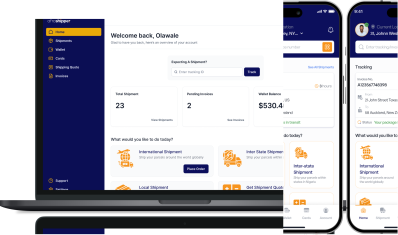
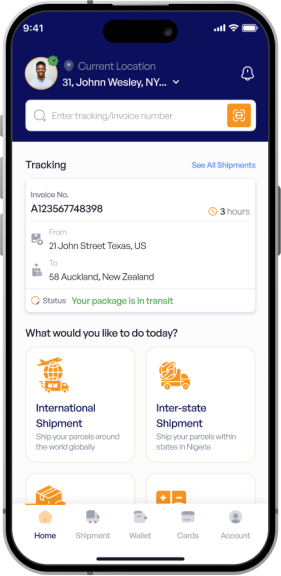
3. Real-Time Delivery Tracking
You always know where your shipment is and how soon it will arrive. Click here to explore this solution
4. Careful Local Hand-over
Your package is handled with respect and delivered with professionalism — your brand image stays intact.
5. Flexible, Business-Friendly Shipping Process
Whether you’re shipping frequently or occasionally, our system adapts to you.
When your shipping partner prioritizes your customers as much as you do, every delivery becomes an opportunity to build trust with Afroshipper and your customers by extension.
Conclusion
Shipping delays at Nigerian ports happen for many reasons: congestion, customs bottlenecks, infrastructure gaps, seasonal surges, and even global disruptions.
You may not be able to fix the system — but you can control how prepared you are.
When your logistics solution combines:
- Transparent pricing
- Professional handling
- Real-time tracking
- Accurate documentation
- Customer-first delivery
…your shipments become smoother, faster, and far more predictable.
And that’s the Afroshipper promise — shipping designed to support your growth, not slow it down.
Want to a stress-free shipment to Nigeria, check this resource here to guide you from A-Z.